
The Securities and Exchange Board of India has recommended reservation for domestic mutual funds within the quota allocated for "anchor investors" in initial public offers.

Against an offer of 4.55 crore shares of Adani Enterprises Ltd, only 4.7 lakh were subscribed, according to information available from the BSE. Adani Enterprises fell almost 20 per cent to below the offer price of its secondary sale as all the seven listed companies of the conglomerate took a beating in the aftermath of Hindenberg Reserach alleged that the group was "engaged in a brazen stock manipulation and accounting fraud scheme over the course of decades".
The Securities and Exchange Board of India (Sebi) is expected to take two decisions simultaneously in July. The first is to introduce a shorter time-frame between the closure of an IPO for subscription and its listing. The second is asking all classes of investors, including qualified institutional buyers (QIBs), to make full payment while applying for an IPO.

Standard Chartered Plc's Rs 2,760-crore (Rs 27.60 billion) maiden Indian depository receipt (IDR) issue got a robust demand from investors on the final day of the offer on Friday and got subscribed a good 2.19 times with most of the bids coming in from qualified institutional buyers (QIBs).
Investors seem to have fully savoured the Burger King India IPO, with the share sale getting subscribed a massive 156.65 times on the last day of the offer on Friday.
Torrent Power (up 19.25 per cent) and GVK Power and Infrastructure (up 12.22 per cent) have seen a dramatic rise in the run up to PGCIL issue.
In a far reaching move to develop Indian capital markets, the Securities and Exchange Board of India on Friday decided to remove discretion in allotment of shares to qualified institutional buyers (QIBs) in the public offering.
The initial public offer of Info Edge (India) Ltd, owner of job portal Naukri.com, has received an enthusiastic response from investors with the issue getting subscribed by more than five times on the second day itself.

The Rs 702-crore IPO received bids for 2,93,41,84,140 shares against the total issue size of 2,32,59,550 shares, according to data available till 3.30 pm on Wednesday.

Domestic mutual funds (MFs) have underpinned demand for most public floats this year, dominated by small- and mid-sized initial public offerings (IPOs). Of the 24 IPOs that have hit the market so far this financial year (2023-24, or FY24), MFs have played the role of 'anchor investors' in 20. They have subscribed to over 40 per cent, or Rs 2,850 crore, worth of shares of the Rs 6,900 crore on offer in the anchor category, according to data provided by PRIME Database, a firm that tracks primary market data.
The much-awaited TCS IPO opened on Thursday, to a lukewarm response. The offer has been subscribed 91.08 per cent on the first day, and most bids are at Rs 775.
Financial services company Indiabulls is all set to hit the capital market with its initial public offering of 25 per cent stake at a face value of Rs 2.0

Sun Pharma stated the company wanted shareholders' approval to "issue, offer and allot equity shares or non-convertible securities, other than warrants, up to an amount of Rs 12,000 crore ($2 billion), to qualified institutional buyers pursuant to a QIP."

US and European institutional investors bought a majority of shares in the over Rs 4,800 crore (Rs 48 billion) QIP offering by telecom operator Reliance Communications.
Shares reserved for Qualified Institutional Buyers (QIB), including banks and mutual funds in the LIC's public offer were subscribed fully on Monday morning, taking the overall subscription of the issue to a little over 2 times. Against 3,95,31,236 reserved, 4,61,62,185 bids were received, reflecting a subscription of 1.17 times, according to data posted on stock exchanges at 12:12 pm. Non institutional investors' portion was subscribed 1.38 times.

Adani Enterprises on Wednesday said it has decided to withdraw its fully subscribed Rs 20,000-crore follow-on public offer (FPO) and will return the proceeds to investors. The announcement came a day after the company's FPO was subscribed fully on the last day of the offer on Tuesday. "The Board of Adani Enterprises Ltd., (AEL) decided not to go ahead with the fully subscribed FPO.
For the initial public offering (IPO) of the Life Insurance Corporation of India (LIC), the Centre has shortlisted 50-60 anchor investors, which include BlackRock, Sands Capital, Fidelity Investments, Standard Life, and JP Morgan, and will soon finalise its anchor book. The feedback from anchor investors has led to price discovery in LIC shares, valuing India's largest insurer at around Rs 7 trillion, said an official aware of the development. The "attractive valuation" is seen widening the investor base by providing an opportunity to more of them to participate in the IPO, the official added.
LIC's public offer, the country's biggest-ever IPO, witnessed full subscription of the retail portion on day three on Friday. The overall issue was subscribed 1.38 times, according to data posted on stock exchanges on 7 pm. Against 16,20,78,067 shares on offer, 22,36,98,915 bids were received. However, the Qualified Institutional Buyer (QIB) and Non-Institutional Investor (NII) portions are yet to be fully subscribed.
LIC's public offer, the country's biggest-ever IPO, was fully subscribed on the second day of bidding on Thursday. Against 16,20,78,067 shares on offer, 16,68,60,765 bids were received -- translating into a subscription of 1.03 times, as per data on stock exchanges as of 7 pm. However, the Qualified Institutional Buyer (QIB) and Non-Institutional Investor (NII) portions have received a tepid response so far.
LIC's public offer, the country's biggest-ever IPO, saw the policyholders' portion being oversubscribed on the first day itself on Wednesday, though overall subscription stood at just 66 per cent. The government aims to generate about Rs 21,000 crore by selling 3.5 per cent stake in the insurance behemoth. The LIC initial public offering (IPO), open for retail and institutional investors, is set to close on May 9. The issue period also includes bidding on Saturday, May 7.

Online auto classified platform CarTrade Tech on Tuesday said it fixed a price band of Rs 1,585-1,618 a share for its nearly Rs 2,999-crore initial public offer. The initial public offering (IPO) will open for subscription on August 9 and conclude on August 11. The bidding for anchor investors will open on August 6, the company announced. The initial share-sale will be entirely an offer for sale (OFS) of 18,532,216 equity shares.
The insurer is a venture between banking major ICICI Bank and the UK's Prudential Corporation Holdings. Singapore's Temasek and Premji Invest are also the shareholders.

In the past two months alone, four companies have garnered a cumulative Rs 22,400 crore via this route.
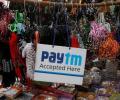
Paytm's Rs 18,300 crore IPO was oversubscribed 1.89 times on the last day of India's biggest share sale on Wednesday, making it one of the country's most valued companies. The initial public offering of Paytm's parent company One97 Communications Ltd received bids for 9.14 crore equity shares against the offer size of 4.83 crore shares, according to information available from stock exchanges. While the portion set aside for retail investors was oversubscribed early, institutional buyers including FIIs flooded the share sale with offers on Wednesday, seeking 2.79 times the number of shares reserved for them.

The company's IPO -- the first by a private bank in a decade -- was oversubscribed a staggering 69.62 times.

The strong response for the IPOs, however, has shifted liquidity away from the secondary markets, with the benchmark Sensex falling 1.3 per cent in the previous two trading sessions.

Zomato's mega initial public offering (IPO) ended with a bumper 38 times oversubscription on Friday as institutional investors poured money to get a pie of the hottest online food delivery platform. Zomato got bids for 2,751.25 crore shares against 71.92 crore shares on offer, stock exchange data showed. The IPO is India's biggest since March 2020. Institutional investors, who shied away in the first two days of the IPO, bid several times over the number of shares reserved for them.

The company commands a market valuation of Rs 31,702.37 crore (Rs 317.02 billion).
 © 2026 Rediff.com - Advertise with us - Disclaimer - Privacy Policy - Sitemap - Feedback - About us - Terms of use - Grievances